A Comprehensive Guide to Commercial Truck & 18-Wheeler Accident Claims in Georgia
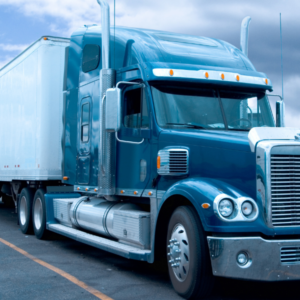
When a 40-ton, 18-wheeler collides with a 2-ton passenger vehicle, the laws of physics are brutal and unforgiving. The aftermath is often catastrophic, leaving victims with life-altering injuries, emotional trauma, and a future that is suddenly and terrifyingly uncertain. But the physical disparity is just the beginning of the chasm that separates a typical car wreck from a commercial trucking disaster. In Georgia, which is a fault-based state, the responsible party is required to pay for damages, adding another layer of complexity to these cases.
A collision with a commercial truck is not just a big car accident. It is a fundamentally different and profoundly more complex legal challenge. While a car accident case may involve one at-fault driver and one insurance policy, a trucking accident case immediately pulls you into a complicated web of corporate structures, federal regulations, multiple layers of insurance, and a team of corporate lawyers dispatched to the scene with one goal: to protect the company’s profits by minimizing or denying your claim. Hiring an experienced truck accident lawyer is essential to counter these legal teams and ensure your rights are protected.
Imagine a typical rear-end collision at a stoplight. Now, imagine that same collision, but the vehicle behind you is an 80,000-pound semi-truck that requires the length of a football field to come to a complete stop. The forces are incomparable, the injuries are more severe, and the legal framework governing the incident is infinitely more complex.
This comprehensive guide is designed to level the playing field. It will pull back the curtain on the trucking industry and explain the complex legal framework that a specialized truck accident law firm uses to hold negligent parties accountable and secure the full compensation victims rightfully deserve. Victims of commercial vehicle accidents in Georgia have the same right to compensation as victims of car accidents, but they face additional challenges due to the complexity of these cases.
Georgia Truck Accident Claims: Understanding the Law of the Land and Federal Trucking Regulations (FMCSA)
Nearly every aspect of the interstate trucking industry is governed by a massive set of federal laws contained in the Federal Motor Carrier Safety Regulations (FMCSRs), which are enforced by the Federal Motor Carrier Safety Administration (FMCSA). These federal regulations are not suggestions; they are the law, and they form the foundation of any successful truck accident claim. Vehicles such as a tractor trailer, semi trucks, and any large truck are all subject to these FMCSA rules. An experienced semi accident lawyer knows that a violation of an FMCSR is often direct evidence of negligence, a legal concept known as negligence per se. Georgia law also requires commercial trucks to carry higher minimum liability coverage than passenger vehicles due to their potential for causing extensive damage.
Unlike standard car accidents, truck accident claims involve additional legal complexities and regulations, including both state and federal regulations, making them more complicated to handle.
Introduction to Federal Trucking Regulations
Federal trucking regulations are the backbone of safety in the commercial trucking industry, designed to protect not only commercial truck drivers but also everyone who shares the road with large trucks. The Federal Motor Carrier Safety Administration (FMCSA) is the agency tasked with creating and enforcing these rules, which cover every aspect of commercial trucking – from who is qualified to drive a commercial truck, to how long truck drivers can be on the road, to the standards for vehicle maintenance and cargo securement. Regulations for commercial drivers are especially important, as they maintain safety standards for commercial vehicles and play a crucial role in legal considerations when violations by commercial drivers occur. These federal trucking regulations are not just bureaucratic red tape; they are essential safeguards that help prevent devastating truck accidents.
For victims of a truck accident, understanding these regulations is critical. Trucking companies and their drivers are legally obligated to follow strict guidelines, and any violation can be a key factor in determining fault and liability in truck accident cases. In Georgia, where major highways see heavy commercial truck traffic, truck accident claims often hinge on whether federal trucking regulations were followed. That’s why working with an experienced truck accident lawyer who knows how to investigate these issues is so important. A knowledgeable attorney can identify violations, hold trucking companies accountable, and fight for the compensation victims deserve after a Georgia truck accident.
Part 395: Hours-of-Service (HOS) Rules & Driver Fatigue
Driver fatigue is a leading cause of truck accidents. FMCSR Part 395 exists solely to combat this. The key provisions for property-carrying drivers include:
- The 11-Hour Driving Limit: A driver may drive a maximum of 11 hours after 10 consecutive hours off duty.
- The 14-Hour Driving Window: A driver cannot drive beyond the 14th consecutive hour after coming on duty. This window is absolute and includes all on-duty time, such as waiting at a loading dock or performing inspections.
- The 30-Minute Break Rule: After 8 cumulative hours of driving, a driver must take at least a 30-minute off-duty break before they can drive again.
- The 60/70-Hour Limit: A driver cannot be on duty for more than 60 hours in 7 consecutive days or 70 hours in 8 consecutive days.
Part 396: Inspection, Repair, and Maintenance
An 80,000-pound truck is a collection of complex systems that endure incredible stress. Part 396 of the FMCSRs mandates a rigorous maintenance protocol.
- Systematic Inspection & Maintenance: Motor carriers must have a systematic program to inspect, repair, and maintain all vehicles. They must keep detailed records of all repairs and preventative maintenance for at least one year. In many cases, maintenance contractors are also involved in performing repairs or maintenance. If maintenance contractors perform substandard work, they can impact safety and may share liability for resulting accidents.
- Driver Vehicle Inspection Reports (DVIRs): Drivers are legally required to conduct pre-trip and post-trip inspections. According to §396.11, this inspection must, at a minimum, cover: brakes (including trailer brake connections), parking brake, steering mechanism, lighting devices and reflectors, tires, horn, windshield wipers, rear vision mirrors, coupling devices, and wheels and rims. If any of these items are defective, the driver must note it on the DVIR, and the carrier is legally forbidden from allowing the truck on the road until the repair is made and certified. When a crash is caused by brake failure or a tire blowout, these logs are a primary source of evidence.
Part 382: Controlled Substances and Alcohol Use and Testing
The FMCSA has a zero-tolerance policy. Part 382 requires trucking companies to conduct:
- Pre-employment drug testing for all drivers.
- A program of random drug and alcohol testing.
- Mandatory Post-Accident Testing: Under §382.303, a test is required after any crash involving a fatality. It is also required after a crash resulting in an injury requiring immediate medical treatment away from the scene if the truck driver receives a traffic citation. Failure to conduct this test is a serious violation and creates a powerful inference in a civil case that the carrier was hiding a positive result.
Part 392: Driving of Commercial Motor Vehicles
This section covers general on-the-road rules. For instance, §392.82 explicitly prohibits texting and using a hand-held mobile telephone while operating a commercial motor vehicle. This provides a clear federal statute to cite when proving distracted driving, strengthening the case beyond general negligence.
Commercial Vehicle Safety
Commercial vehicle safety is at the heart of the FMCSA’s mission, and strict regulations are in place to minimize the risk of truck accidents on our roads. Trucking companies are required to implement comprehensive safety programs that include regular vehicle inspections, adherence to maintenance schedules, and robust driver training initiatives. These measures are designed to ensure that commercial trucks are in top working condition and that commercial truck drivers are fully prepared to handle the unique challenges of operating large vehicles.
Hours of service rules are another critical component, limiting how long drivers can be behind the wheel without adequate rest. This helps prevent fatigue-related truck accidents, which are all too common in the commercial trucking industry. Additionally, commercial vehicles must comply with weight restrictions and cargo securement standards to prevent accidents caused by overloaded or improperly loaded trucks.
When a truck accident occurs, one of the first steps for Georgia truck accident attorneys is to investigate whether the trucking company or driver failed to meet these safety requirements. After a commercial truck accident, it is important to follow the legal and procedural steps, such as filing claims with insurance providers and pursuing compensation for damages resulting from the incident. Non-compliance with FMCSA regulations can be a decisive factor in establishing liability and pursuing a successful truck accident claim. By thoroughly examining maintenance records, driver training documentation, and inspection logs, experienced truck accident attorneys can uncover evidence of negligence and help victims recover full and fair compensation for their injuries and losses after a Georgia truck accident.
Uncovering the Cause: Investigating Common Trucking Accidents
Data from the Insurance Institute for Highway Safety (IIHS) and our own case experience show that the vast majority of these incidents stem from preventable negligence.
- Driver Fatigue: Proven through HOS log violations.
- Improper or Unsecured Cargo: An overloaded or unbalanced trailer can cause a driver to lose control. We investigate weight station receipts and bills of lading to prove this. Cargo loaders are responsible for ensuring cargo is properly secured and balanced, and their failure to do so can result in liability.
- Inadequate Maintenance: Brake failure, tire blowouts, and steering malfunctions are rarely a surprise. They are the result of a corporate culture that cuts corners on safety.
- Distracted Driving: We subpoena cell phone records and data from in-cab devices to prove a driver was texting, calling, or using a GPS instead of watching the road.
- Inadequate Driver Training: A carrier has a duty to ensure its drivers are trained not just to get a CDL, but to handle the specific rigs they operate, especially specialized trucks like tankers or flatbeds. We investigate training records to expose this common point of failure.
- Speeding and Reckless Driving: The ECM data is irrefutable. It will show the truck’s speed in the seconds before impact, proving if the driver was exceeding the speed limit or driving too fast for conditions.
These types of negligence often result in serious injuries due to the size and weight of commercial trucks.
The Chain of Liability: Who Can Be Sued After a Truck Accident?
This is the most critical difference in a trucking case. Truck accident liability is a complex chain, often involving multiple liable parties and multiple parties such as drivers, trucking companies, manufacturers, and maintenance providers. This makes these cases more complex than standard auto accidents, as a successful case often involves pursuing claims against multiple entities simultaneously to ensure full compensation for our clients.
- The Truck Driver: The individual behind the wheel is the starting point if they were negligent.
- The Trucking Company (Motor Carrier): The carrier is almost always a primary defendant. We can hold them liable under two distinct legal theories:
- Vicarious Liability: Under the doctrine of respondeat superior, the employer is automatically responsible for the negligent acts of its employee (the driver) committed within the “course and scope” of their employment.
- Direct Negligence: We also sue the company for its own negligence. This is a separate and powerful claim. We investigate for:
- Negligent Hiring: Did the company hire a driver with a known history of DUIs, reckless driving, or FMCSA violations? We find this in their driving record and background checks.
- Negligent Training: Did they fail to properly train the driver on safety procedures or the specific truck they operate?
- Negligent Supervision: Did the company pressure drivers to violate HOS rules, ignore failed drug tests, or turn a blind eye to drivers who “doctored” their logs (before ELDs)?
- Negligent Retention: Did the company keep a driver employed after they knew, or should have known, the driver was a danger to the public?
- If the company or driver’s conduct rises to the level of gross negligence, punitive damages may be available against the negligent party.
- The Freight Owner or Shipper: The company that owned the cargo can be held liable if its own employees improperly loaded the trailer, creating an unbalanced and dangerous load that was a direct cause of the crash.
- The Freight Broker: A broker connects shippers with trucking companies. While they often try to claim they are merely a “matchmaker,” the law is increasingly holding brokers liable for Negligent Selection if they hire a trucking company they know has a poor safety rating and a history of crashes.
- The Maintenance Facility: If a third-party mechanic shop performed shoddy repairs or failed to identify a critical safety defect, they can be named as a defendant.
- The Vehicle or Parts Manufacturer / Truck Manufacturer: If the accident was caused by a defective component – such as a tire that suffers a tread separation or a brake system that malfunctions – the manufacturer or truck manufacturer can be held liable under a product liability claim.
- The Owner Operator: If the truck is operated by an owner-operator, claims are typically filed with their own motor carrier insurance policy, as they may be personally responsible for their insurance coverage in such incidents.
All negligent parties and responsible parties must be identified and investigated to ensure full recovery for the injured person.
A personal injury claim allows an injured person to pursue compensation for damages resulting from the accident. This includes lost wages, lost income, non economic damages such as pain, suffering, and emotional distress, as well as compensation for permanent disability if the injuries are long-lasting or irreversible.
The Anatomy of a Georgia Truck Accident Lawsuit
Understanding the legal journey ahead can provide clarity during a difficult time. Here is a simplified timeline of what to expect.
Phase 1: The Immediate Aftermath & Investigation (Days 1-30)
This is the most critical phase for preserving evidence. Upon being hired, our firm immediately sends spoliation letters to all potential defendants, legally demanding they preserve the truck, its black boxes, driver logs, and all related records. It is also crucial for anyone involved in a truck accident to seek emergency medical care right away to address any injuries and ensure safety. Our team and our network of experts, including an accident reconstructionist, will visit the crash scene, document evidence, and inspect the vehicles involved. We gather police reports, interview witnesses, and begin building the foundation of the case.
Phase 2: Pre-Suit Negotiations and Filing the Complaint (Months 1-4)
We compile all initial evidence and medical records and present a comprehensive demand package to the relevant insurance carriers. Sometimes, a fair settlement can be reached at this early stage, but this is rare in catastrophic cases. If the insurance companies refuse to offer a fair value, we file a Complaint with the appropriate Georgia court. This official legal document outlines who we are suing, the facts of the case, the laws that were violated, and the damages we are seeking. This formally begins the lawsuit.
Phase 3: The Discovery Process (Months 4-18+)
Discovery is the longest and most intensive phase of the lawsuit. It is where both sides exchange information and evidence under oath. The primary tools of discovery are:
- Interrogatories: These are written questions that we send to the defendants, which they must answer in writing and under oath. We ask detailed questions about their safety policies, the driver’s history, and the truck’s maintenance.
- Requests for Production of Documents: This is a formal request for all the evidence we listed earlier – driver files, maintenance logs, ECM/ELD data, post-accident test results, and internal company communications.
- Depositions: This is the cornerstone of discovery. A deposition is a formal, out-of-court session where we question defendants and witnesses under oath in front of a court reporter, who creates a transcript. We will depose the truck driver, the company’s safety director, the mechanics, and any other relevant parties. This process allows us to lock in their testimony, expose inconsistencies, and gain critical admissions that will be used at trial.
Phase 4: Mediation and Final Negotiations (After Discovery)
Once discovery is complete, the court will typically order the parties to attend mediation. This is a confidential settlement conference facilitated by a neutral third-party mediator. Both sides present their case, and the mediator works to find a middle ground. The vast majority of truck accident cases are resolved at this stage. Our preparation throughout discovery puts us in the strongest possible position to negotiate from a position of power during mediation.
Phase 5: Trial (If Necessary)
If the defendants refuse to offer a fair settlement at mediation, we will not hesitate to take your case to trial. This involves selecting a jury, presenting opening statements, calling our expert and fact witnesses to testify, cross-examining the defense’s witnesses, and making a closing argument. While trial carries risks, it is sometimes the only way to achieve true justice.
The Insurance Battle: How Commercial Insurers Fight and How We Win
While your lawsuit is technically against the truck driver and the motor carrier, the true opponent orchestrating the defense is almost always a massive commercial insurance company. Unlike standard auto insurers, these corporations – like AIG, Zurich, Travelers, or Progressive Commercial – have multi-billion dollar balance sheets and entire departments staffed with lawyers and adjusters who specialize in one thing: minimizing payouts on catastrophic injury claims. These insurers often seek to limit payouts on truck accident claims, fighting to reduce the amount of compensation their policies cover.
Understanding their playbook is the first step in defeating them. From the moment the crash occurs, they launch a sophisticated, aggressive strategy designed to limit their financial exposure. An unrepresented victim stands very little chance against these tactics. Our firm has a proven track record of overcoming these insurance company tactics and securing favorable outcomes for our clients.
Tactic 1: The “Rapid Response” Team and Narrative Control
Within hours of a serious or fatal crash, the trucking company’s insurer will deploy a “rapid response” team. This team often includes defense lawyers, investigators, and their own accident reconstruction experts. They will arrive on the scene while the wreckage is still hot, often before the victim has even been stabilized at the hospital.
Their goals are to:
- Control the Scene: They document the scene from a perspective that favors their client, taking photos and measurements designed to support a narrative that the passenger vehicle was at fault.
- Interview the Truck Driver: They immediately meet with the driver to “coach” them, shape their story, and prepare them for law enforcement interviews, all under the protection of attorney-client privilege.
- Preserve Favorable Evidence: They will download the ECM data and collect physical evidence, but they will interpret it to their advantage from the very beginning.
- Identify and Interview Witnesses: They will attempt to get statements from eyewitnesses that can be used to cast doubt on the victim’s claim.
How We Fight Back: This is why it is so critical to hire an experienced law firm immediately. We level the playing field by deploying our own team. We send our own investigators and accident reconstructionists to the scene to conduct an independent analysis. We immediately send spoliation letters to ensure the evidence they collected is not altered or destroyed. We find and interview witnesses to get their untainted version of events. We fight their narrative with our own, built on facts, from day one.
Tactic 2: The “Friendly” Adjuster and the Recorded Statement Trap
Within days, a friendly-sounding insurance adjuster will call you. They will be incredibly empathetic, expressing deep sympathy for what you are going through. They will say they just want to “understand what happened” and “process your claim.” Then, they will ask you to provide a recorded statement.
This is a trap. The adjuster’s goal is to get you on record saying something – anything – that can be used against you later. They will ask leading questions designed to elicit damaging responses:
- “How are you feeling today?” (If you say “I’m okay” or “fine,” they will use it to argue your injuries aren’t severe).
- “Were you in a hurry?” (To suggest you were speeding).
- “Did you see the truck before the impact?” (If you say no, they will argue you were inattentive).
- “Tell me in your own words what happened.” (Hoping you will say something inconsistent with the physical evidence or admit even a tiny amount of fault).
How We Fight Back: The rule is absolute: never give a recorded statement to the at-fault party’s insurer. As our client, you will be instructed to refer all calls to our office. We handle all communications with the insurance company. This protects you from their tactics and ensures they cannot use your own words against you. Consulting with a truck accident lawyer before speaking with insurance adjusters is crucial to building a stronger case and avoiding common pitfalls.
Tactic 3: Delay, Deny, Defend
This three-pronged strategy is the core of the insurance defense playbook, designed to wear down victims both financially and emotionally.
- Delay: The insurer will drag out the process for as long as possible. They will be slow to respond to requests, claim paperwork was lost, or ask for redundant information. They know that as your medical bills pile up and you are out of work, you will become more desperate. The goal is to make you so financially strained that you will accept a “lowball” settlement that is a fraction of your claim’s true value.
- Deny: They will find any reason, no matter how flimsy, to deny liability. They will take minor inconsistencies in witness statements and blow them out of proportion. They will misinterpret the law. Most commonly, they will develop a defense that blames you, the victim, for the crash. They will argue you were in the truck’s “no-zone” (blind spot), that you changed lanes improperly, or that you braked suddenly.
- Defend: If you refuse to accept their unfair offer, they will force the case into litigation, prepared to spend tens or even hundreds of thousands of dollars on defense lawyers. Their calculation is that the cost of defending the case is less than the cost of paying your full claim. They use their massive financial resources as a weapon to intimidate you and your attorney, hoping you will eventually give up.
How We Fight Back: We are built for this fight. Our firm has the financial resources and trial experience to counter the “Delay, Deny, Defend” strategy. We fund the entire cost of litigation, so our clients are never under financial pressure to accept an unfair offer. We aggressively push the case forward through the court system, meeting every delay with a motion to compel. We use the evidence gathered by our experts to systematically dismantle their attempts to deny liability. We make it clear to them from the outset that we are fully prepared to take the case all the way to a jury verdict, removing their ability to win through intimidation. This willingness to go to trial is what ultimately forces them to offer fair settlements during mediation. Georgia’s modified comparative negligence rule also allows victims to recover compensation even if they are partially at fault, as long as their fault is less than 50%.
By understanding the insurance company’s playbook, you can see why trying to handle a serious truck accident claim on your own is not just difficult – it’s impossible. This is an adversarial process against a sophisticated, well-funded opponent. Victory requires having an equally sophisticated and dedicated advocate in your corner from the very beginning.
The Role of Expert Witnesses in Winning Your Case
Because of the complexity, winning a truck accident case requires a team of highly qualified expert witnesses to explain the evidence to a jury.
- Accident Reconstructionist: This expert, often a former law enforcement officer or engineer, visits the scene, inspects the vehicles, and analyzes all the data to create a scientific, computer-generated reconstruction of exactly how the crash happened and who was at fault.
- FMCSA Expert/Trucking Industry Expert: This expert reviews the carrier’s logs, policies, and procedures to explain to the jury how the company’s violations of federal safety regulations led directly to the crash.
- Medical Experts: Your treating physicians and other medical specialists will testify about the nature and extent of your injuries, the treatment you have undergone, and the future treatment you will require.
- Life Care Planner: For catastrophic injuries, a certified life care planner creates a comprehensive, detailed projection of every medical and quality-of-life need the victim will have for the rest of their life, from future surgeries to in-home nursing care and vehicle modifications.
- Vocational Rehabilitation Expert & Economist: The vocational expert determines how your injuries impact your ability to work and earn a living. An economist then takes that information, along with the life care plan, to calculate the total economic loss over your lifetime, presenting it to the jury in a clear, concise report.
Georgia-Specific Trucking Laws
In addition to federal rules, Georgia has its own laws. O.C.G.A. Title 40, Chapter 6 governs traffic, including specific rules of the road for all drivers. Crucially, state law mandates insurance minimums. While a standard Georgia car owner may only have $25,000 in liability coverage (O.C.G.A. § 33-7-11), commercial carriers are required to carry much higher minimums under state and federal law (O.C.G.A. § 40-1-112), often ranging from $750,000 to over $5 million.
Frequently Asked Questions (FAQ)
A spoliation letter is a formal legal demand sent to the trucking company ordering them not to destroy any relevant evidence. Trucking companies are only required to keep certain logs and data for a limited time. Without a spoliation letter sent immediately by a qualified attorney, they could legally dispose of critical evidence like ECM data or maintenance records that could be the key to proving your case. It is arguably the most critical first step an attorney must take. Additionally, in Georgia, the statute of limitations for personal injury lawsuits, including truck accidents, is two years from the date of the accident, making timely action essential.
You should politely decline to speak with them, take down their information, and never accept any offer or sign any document without consulting an experienced truck accident lawyer. Insurance companies for major carriers are notoriously aggressive. Their goal is to get you to accept a quick, lowball offer before the true, lifelong cost of your injuries is known. This is a common tactic, and falling for it can cost you millions. Read more here: The Average Settlement for a Truck Accident Case.
A DOT Recordable accident is a crash that the motor carrier must, by law, record in its accident register. It generally includes any crash involving a fatality, a bodily injury requiring immediate medical treatment away from the scene, or disabling damage to a vehicle requiring it to be towed. A company’s history of these accidents is a public record and can be used to establish a pattern of unsafe operations.
For catastrophic injuries, we work with a team of experts, including doctors, economists, and certified life care planners. A life care planner creates a comprehensive, detailed projection of every medical and quality-of-life need the victim will have for the rest of their life, from future surgeries and medications to in-home nursing care and vehicle modifications. An economist then calculates the present-day cost of that entire plan, which often runs into the tens of millions of dollars.
You Cannot Afford to Fight a Motor Carrier Alone
The moments after a crash with an 18-wheeler are overwhelming. While you are dealing with medical trauma, the trucking company and its insurer have already deployed a rapid-response team of investigators and lawyers to the scene to control the narrative and build a case against you. These teams may also offer low initial settlements to protect their interests, which can undervalue the true cost of your injuries.
You need a team that can fight back immediately. At Geiger Legal Group, we have the resources, the deep knowledge of federal trucking law, and the trial experience to take on the biggest carriers and their insurance companies. We know how to preserve evidence, identify all liable parties, and build a case designed to secure the maximum compensation for your family’s future security and well-being. See our complete guide: Steps to Take Immediately After a Truck Accident.
If you or a loved one has been seriously injured, do not wait. Evidence in these cases is perishable. Contact our Canton, Dalton, or other Georgia offices today for a free, confidential consultation with a dedicated Georgia truck accident attorney. We offer a free consultation to discuss your case with no upfront charges.
Introduction to Commercial Vehicle Accidents
Commercial vehicle accidents, including truck accidents, are a significant concern on Georgia’s highways and roads. These incidents often result in serious injuries, fatalities, and substantial financial burdens for those involved. Trucking companies, truck drivers, and other parties in the commercial trucking industry are required to follow strict federal trucking regulations to help prevent these devastating events. Despite these safeguards, truck accidents still occur, and determining truck accident liability can be a complex process involving multiple parties and layers of responsibility.
When a Georgia truck accident happens, victims are often left facing mounting medical bills, lost income, and uncertainty about their future. Navigating the aftermath of a commercial vehicle accident requires a deep understanding of both federal and state laws, as well as the ability to identify all potentially liable parties. This is where experienced Georgia truck accident attorneys become invaluable. Truck accident attorneys have the knowledge and resources to investigate the circumstances of the crash, hold negligent parties accountable, and fight for the compensation victims deserve. Whether the accident involves a semi truck, delivery truck, or other commercial vehicle, having a skilled legal advocate on your side can make all the difference in the outcome of your case.
Types of Accidents
Truck accidents can take many forms, each presenting unique dangers and legal challenges. Some of the most common types include rear-end collisions, jackknife accidents, rollovers, and crashes caused by shifting or falling cargo. These incidents are often the result of driver error, such as distracted driving or reckless driving, but can also stem from inadequate truck maintenance or mechanical failures. In many cases, the root cause of a trucking accident is not limited to a single factor or party.
Multiple parties may share liability for a truck accident, including the truck driver, the trucking company responsible for vehicle maintenance and driver supervision, the truck manufacturer if a defect contributed to the crash, and cargo loaders who may have improperly secured freight. Determining fault in these cases requires a thorough investigation into all aspects of the accident, from maintenance records to driver behavior and cargo handling. By identifying all liable parties, victims can pursue the full compensation they are entitled to under the law.
Compensation Available
Victims of truck accidents may be eligible to recover a wide range of damages to help them rebuild their lives. Compensation can include payment for medical expenses, lost wages due to time away from work, pain and suffering, and property damage. In cases involving severe or catastrophic injuries, additional compensation may be available for permanent disability, emotional distress, and other non economic damages that impact quality of life.
To maximize the chances of a fair settlement, it is essential to seek medical attention immediately after a truck accident, even if injuries seem minor at first. Prompt medical care not only protects your health but also creates a record that can serve as critical evidence in your claim. An experienced truck accident lawyer can help you gather the necessary documentation, negotiate with insurance companies, and ensure that all aspects of your losses are considered. With the right legal guidance, victims can pursue the full and fair compensation they need to cover medical expenses, lost income, and the long-term effects of their injuries.
What to Do After an Accident
Taking the right steps after a truck accident can make a significant difference in protecting your rights and building a strong case. First and foremost, seek medical attention immediately to address any injuries and document your condition. Next, report the accident to law enforcement and ensure an official report is filed. Exchange information with the truck driver and any other parties involved, including names, contact details, and insurance information.
It is also crucial to consult with an experienced truck accident lawyer as soon as possible. A knowledgeable attorney can help you identify all liable parties, guide you through the legal process, and advise you on how to preserve evidence. Key evidence may include driver logs, maintenance records, and witness statements, all of which can be vital in determining fault and supporting your claim. By acting quickly and working with a skilled legal team, you can pursue compensation and protect your interests after a serious truck accident.
Conclusion
Truck accidents can have life-altering consequences, and the path to recovery is often complicated by legal and insurance challenges. Navigating the complexities of federal trucking regulations, identifying all liable parties, and building a compelling case requires the expertise of experienced Georgia truck accident attorneys. By seeking medical attention immediately, preserving critical evidence, and consulting with a truck accident lawyer, victims can improve their chances of securing full and fair compensation for their injuries and losses.
Truck accident liability often involves multiple parties, from the truck driver to the trucking company and beyond, making it essential to work with a law firm that has a proven track record in handling commercial vehicle accidents. With the right legal support, you can ensure that your rights are protected and that you have the best possible chance of recovering the compensation you deserve after a Georgia truck accident.